

For years, an organic Google result usually exposed a direct link to the publisher page. Google is now rolling out a pattern in which some result clicks first pass through a google.com/goto address. The searcher still reaches the selected page, but the extra routing layer changes what automated systems see and adds new questions about measurement.
What Is a Google Goto URL?
A Google goto URL is an intermediary address that can receive a search result click before redirecting the visitor to the selected webpage. Google has confirmed that this routing system is rolling out and linked it broadly to protection against evolving abuse. Its exact effect on scraping, rank tracking and analytics has not been fully documented.
The practical difference is small for a normal searcher and potentially significant for systems that collect millions of search results. A person clicks once and arrives at the expected page. A data provider may need to request and resolve every intermediary address before it knows the real destination.
This is why the topic needs careful language. The rollout is confirmed. The passthrough behavior has been observed. The idea that it is designed specifically to obstruct SEO scrapers and AI data collection is credible, but it remains an interpretation of the mechanism and Google's broad anti-abuse statement.
What Is Confirmed, Inferred and Still Unknown?
The most useful way to understand the story is to separate three evidence levels. Blending them together makes the change sound either more alarming or less important than the available evidence supports.
The Rollout Is Happening
A Google spokesperson confirmed the rollout to Search Engine Roundtable and referred to technical measures used against evolving forms of abuse.
Scraping Becomes Harder
An encoded passthrough layer can force automated systems to resolve additional requests before identifying final result URLs.
Universal Data Loss
No evidence currently shows that every publisher will lose GA4 attribution, rankings or Search Console data because of the rollout.
How the Google Goto Rollout Developed
Early Public Observation
An SEO practitioner shared an example of search result links rewritten through a Google goto address and suggested an anti-scraping motive.
Testing Was Reported
Search Engine Roundtable documented the test and sightings from several practitioners while noting that the behavior could not yet be reproduced consistently.
Rollout Was Confirmed
Wider sightings appeared, and a Google spokesperson confirmed that the change was rolling out as part of technical protection against abuse.
The timeline matters because early July articles correctly described a test. By late August, the evidence had changed. It is now reasonable to describe the routing behavior as a confirmed rollout, although visibility can still vary across browsers, networks, regions and result types.
What Are Google.com/goto Passthrough URLs?
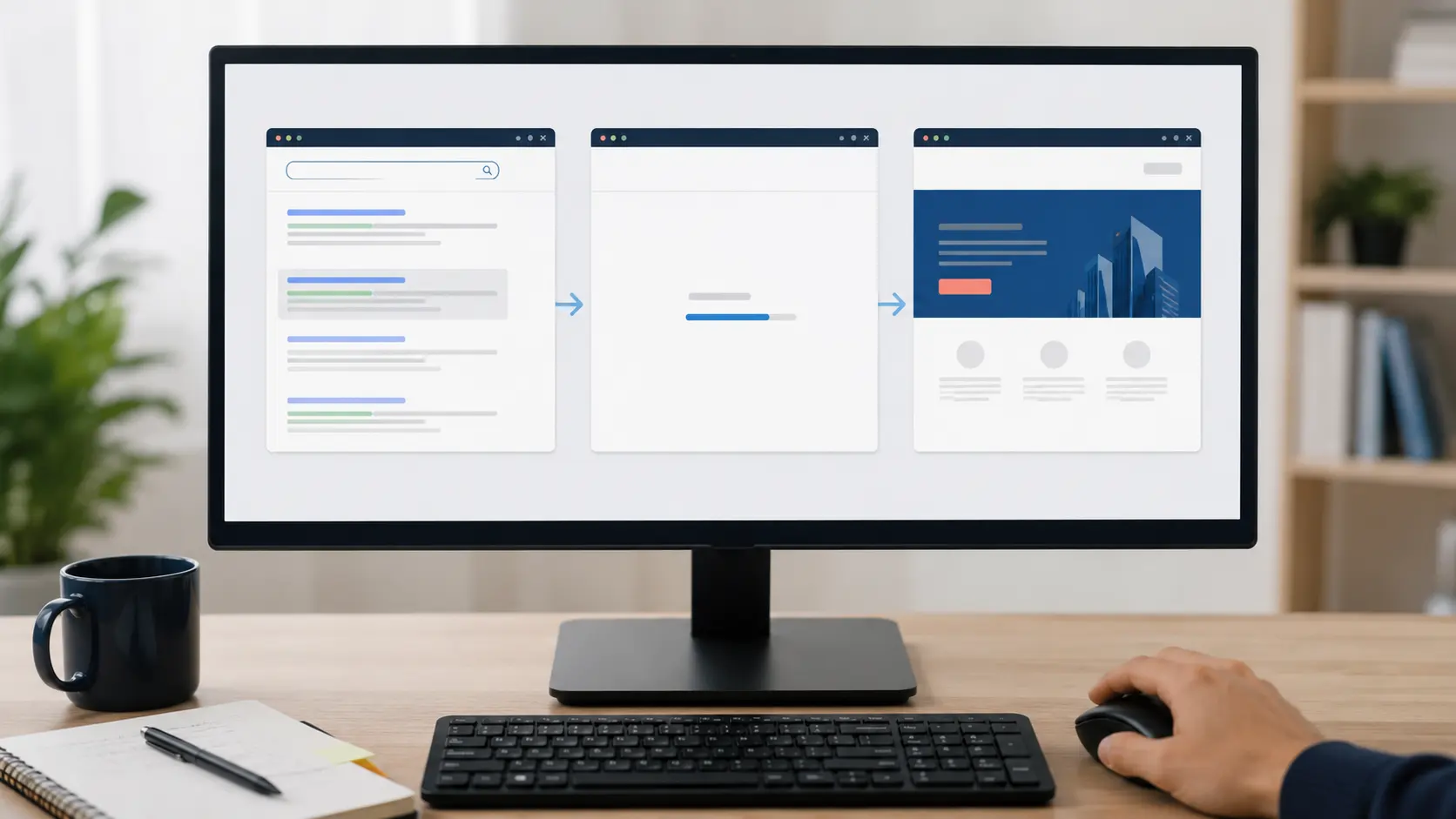
A passthrough URL sits between the link a user selects and the page that ultimately loads. Instead of the search result pointing directly to a publisher URL, it can point first to an address on Google's domain. Google then sends the browser to the intended destination.
Reports have shown forms such as google.com/goto?url=[encoded identifier]. The value is not necessarily a plain, human-readable destination URL. That matters because a simple scraper can no longer assume that the link stored in the result HTML is the publisher page it wants to record.
Is It a Tracking URL or a Redirect URL?
From the outside, it behaves as a redirecting passthrough URL. Industry coverage often calls it a tracking URL because a Google-controlled endpoint can also give Google another point at which to process the click. Google has not published a complete specification describing all data collected or every reason for the endpoint, so it is better to avoid claiming more than the observed behavior proves.
Why Might Ordinary Searchers Barely Notice?
Modern redirects can happen quickly. The address bar may show only the final publisher URL by the time the page loads. The most visible clues are often found before the click, such as the browser status area when hovering over a result, a copied result link or the raw link extracted by an automated system.
How Do Google Goto Redirects Work?
The exact server logic is private to Google, but the observable click journey is straightforward:
- Google builds the search results for a query.
- A result link points to a Google-controlled goto address.
- The final destination is represented by an encoded value or internal identifier.
- The searcher selects the result.
- The browser requests the Google passthrough address.
- Google processes the request and returns a redirect response.
- The browser requests the publisher page.
- The publisher's analytics and server systems record the visit according to the signals they receive.
| Area | Direct result link | Google goto link |
|---|---|---|
| Initial request | Publisher website | Google passthrough endpoint |
| Additional routing | Usually none | One Google-controlled step |
| Destination visibility | Often readable in the link | May be represented by an encoded value |
| Normal user effort | One click | Still one click |
| Automated extraction | Destination can be collected directly | Tool may need to resolve the redirect |
| Google control during click | Less intermediary control | Additional routing and abuse-detection opportunity |
This is not the same as a publisher moving a page with a 301 redirect. Google's redirect documentation explains redirects in the context of site owners forwarding one URL to another and using them as canonical signals. The goto route happens in Google's search interface before the publisher page is requested. Website owners do not control it and should not change their own redirects to imitate or counter it.
Why Is Google Using Goto URLs?
Google's public statement is deliberately broad. The company said it has a long history of deploying technical measures against evolving abuse and regularly acts to protect services and users. That confirms the protection context without defining one exclusive target.
Making Large-Scale URL Extraction More Expensive
Direct result links are convenient for rank trackers, SERP APIs, competitor tools and other automated systems. A collector can parse the result page and immediately store the destination. With a goto layer, the collector may need another network request for each result, then record the redirect destination.
That is manageable for a handful of links. It becomes more expensive when multiplied across thousands of keywords, countries, devices and result pages. Additional requests introduce latency, infrastructure cost, rate-limit exposure and more opportunities for an automated session to be challenged.
Giving Google More Control over the Click Path
A Google-owned endpoint can support several possible functions, including abuse detection, experiment management, result-click measurement and consistency across different search interfaces. These are technically plausible uses. They should remain framed as possibilities until Google documents the endpoint in more detail.
Why the Change Will Not Stop Every Scraper
A redirect is not an impenetrable wall. Tools can often follow individual redirects, use browser automation or collect destinations after navigation. The more realistic impact is friction. Data providers may face more requests, higher costs and less stable collection rather than an immediate end to rank tracking.
Which SEO Tools Could Be Affected?
The change is most relevant to tools that depend on collecting or interpreting search result links at scale. It does not mean that every feature in every SEO platform will break.
Rank Trackers
A tracker may need to resolve each passthrough link before matching a ranking result with the correct publisher page. Temporary failures could appear as missing URLs, delayed updates or unexpected Google addresses.
SERP APIs
Providers may need extra requests or browser processing to return final destination URLs, increasing collection time and infrastructure costs.
Competitor Research Tools
Unresolved goto values could create duplicate records, incorrect landing pages or gaps when a system tries to connect ranking history with a known competitor URL.
AI Data Collection Systems
Systems that discover pages through Google results may need to resolve the intermediate route while managing rate limits, changing identifiers and location-specific results.

What a Tool Problem May Look Like
- A ranking report shows a
google.com/gotoaddress instead of the final page. - Many tracked keywords lose landing-page data at the same time.
- Manual searches still show the website, but the tracking platform reports no ranking.
- Reports are delayed or the vendor announces a collection issue.
- The same final page appears under several temporary or encoded identifiers.
If a platform changes after the rollout, ask the vendor how it resolves goto links before changing your SEO strategy. Our comparison of SEO and AI audit tools also explains why tool methodology matters when evaluating search visibility.
Could Google Goto URLs Affect GA4 and Traffic Attribution?
No universal attribution failure has been confirmed. A redirect adds a place where information could be changed, but that does not prove that Google organic traffic will automatically become direct traffic.
Google Analytics says traffic-source dimensions are used to identify where visitors came from and that the document referrer may set the source when no stronger campaign information is present. Google also explains why sessions can appear as direct traffic when source information is unavailable. Those general principles explain why the goto rollout deserves monitoring, not why teams should assume data loss.
Search Console and GA4 Measure Different Moments
| Data source | What it primarily records | Useful goto check |
|---|---|---|
| Google Search Console | A click from a Google result to the site, assigned using Search Console's reporting rules | Are clicks stable while GA4 organic sessions change? |
| Google Analytics 4 | Events and sessions recorded after the destination page and analytics code load | Did google organic, direct or unassigned traffic shift? |
| Server logs | Requests that reached the website server | Do landing-page requests remain stable? |
| Rank tracker | Search positions and destination URLs observed by the provider | Are gaps isolated to the tool rather than the site? |
A Search Console click and a GA4 session have never been interchangeable. A person may click, leave before analytics loads, reject consent, trigger an ad blocker or create a session that GA4 classifies differently. The new routing layer is one more variable to test, not a reason to expect exact equality.

Signals Worth Investigating
- Search Console clicks remain stable while GA4 google organic sessions decline materially.
- Direct traffic increases at the same time and on the same organic landing pages.
- The change appears in one browser, country or device group but not others.
- Organic conversions decline only in reporting while leads, orders or server requests remain stable.
- Rank-tracker landing pages disappear without a matching change in Search Console impressions.
Small daily differences are normal. Look for a sustained step change that lines up with rollout visibility and cannot be explained by seasonality, consent changes, tagging releases, website errors or an actual ranking update.
Do Google Goto URLs Affect Rankings, Indexing or Canonicals?
There is currently no evidence that a publisher gains or loses rankings because Google routes a search result click through a goto URL. The passthrough changes the click path, not the published destination URL or the website's canonical configuration.
Do not treat the appearance of a Google redirect as proof of a ranking update. Ranking systems decide which results to show. The goto endpoint changes how a selected result may be reached. Cresto Digital's Google algorithm update timeline covers documented ranking and spam changes separately.
Website owners should not respond by changing canonical tags, adding tracking parameters to organic URLs, creating replacement pages or modifying robots.txt. Those actions can introduce real SEO problems while trying to solve a routing behavior controlled by Google.
Are Google Goto URLs Safe and Why Is the Destination Less Visible?
A genuine address on google.com is part of Google's domain. That does not remove the need to assess the final destination. Search results lead to independent websites, and a copied passthrough link can make the final address less obvious before navigation.
Check the exact registered domain rather than trusting text that merely contains the word Google. After the redirect, confirm the final website address before entering passwords, payment information or other sensitive details. For SEO teams documenting the rollout, store the query, visible result, goto address and final destination together so the evidence is understandable later.
A Practical Monitoring Plan for SEO Teams
A good response begins with a baseline. If the routing change has no measurable effect on your site or tools, you do not need to manufacture a fix.
| Surface | Baseline metric | Warning signal | First validation |
|---|---|---|---|
| Search Console | Clicks by page, device and country | Unexpected reporting shift | Compare impressions, positions and affected pages |
| GA4 | google organic sessions and landing pages | Organic drop with direct increase | Check consent, tags, referrer data and releases |
| Server | Requests to key organic landing pages | Difference from analytics trend | Review request volume and response codes |
| Rank tracker | Tracked keyword and URL coverage | Missing pages or Google goto values | Run a small manual sample and ask the vendor |
| Conversions | Leads, orders and qualified actions | Reporting loss without business decline | Compare CRM or commerce records |
How to Test Whether You Can See Goto Links
- Choose several non-personalized searches where your site normally appears.
- Record the browser, device, country and signed-in state.
- Hover over a standard organic result and inspect the browser's displayed destination.
- Copy the result link when the browser allows it, without sharing the encoded link publicly.
- Open the result and record the final landing-page URL.
- Repeat the sample in another browser or session.
- Compare the finding with Search Console, GA4 and your rank tracker over time.
Do not expect identical behavior in every test. Search interfaces are frequently experiment-driven, and routing may depend on location, network, browser, device, result type or session.
What Should Website Owners Do Right Now?
Recommended Actions
- Save a baseline for Search Console clicks, GA4 organic sessions, direct traffic and key landing pages.
- Compare trends weekly instead of reacting to a single day.
- Check server requests or business outcomes when analytics reports disagree.
- Ask SEO-tool vendors how they identify final destination URLs.
- Document examples with dates, browsers, queries and final pages.
- Keep canonical URLs, internal links and publisher redirects stable.
- Follow new Google statements and vendor methodology updates.
Actions to Avoid
- Do not change website URLs because Google changed its own result links.
- Do not add unnecessary organic campaign parameters to every page.
- Do not edit canonical tags or robots.txt without a site-level reason.
- Do not interpret a tool collection failure as an automatic ranking loss.
- Do not promise clients that attribution will fail when no site evidence supports it.
- Do not attempt to bypass Google's anti-abuse systems.
What Does This Change Mean for the SEO Industry?
The broader lesson is not that rank tracking is over. It is that search-result data is controlled by the platform that produces it. A small change to link routing can increase collection costs and expose how much an SEO report depends on one provider's ability to observe Google consistently.
Agencies should make data provenance part of reporting. A ranking chart, Search Console click, GA4 session and CRM lead describe different parts of the same customer journey. When those systems disagree, the job is to reconcile them rather than choose the most convenient number.
The rollout also strengthens the case for first-party measurement. Clean analytics implementation, reliable conversion records, server visibility and documented benchmarks are assets that a search-interface change cannot replace. A focused one-time SEO audit can identify where a reporting stack is fragile before the next platform change arrives.
Research Sources and Evidence
The article uses original reporting for the rollout and official Google documentation for measurement concepts. Potential outcomes are identified as scenarios unless a source confirms that they are occurring.
Original Reporting
Official Google Documentation
Source policy: External resources are provided so readers can verify important claims. They open in a new tab and are marked nofollow. Cresto Digital does not control future changes to third-party pages.
Frequently Asked Questions
What is a Google goto URL?
A Google goto URL is a Google-controlled passthrough address that can receive a search result click before redirecting the visitor to the selected webpage. The destination may be represented by an encoded value rather than a directly readable publisher URL.
Why is Google using goto URLs?
Google confirmed the rollout and referred broadly to technical measures against evolving abuse. Making automated extraction more difficult is a plausible industry interpretation, but Google has not published a complete technical explanation of every purpose.
Are Google goto URLs a ranking factor?
There is no evidence that the goto routing layer is a ranking factor. It changes how a result click may be routed, not the documented systems used to crawl, index or rank the destination page.
Do Google goto URLs affect GA4 organic traffic?
No universal GA4 attribution problem has been confirmed. Redirects can affect referral details in some situations, so teams should compare Google organic sessions with Search Console clicks and server requests before drawing conclusions.
Why could Google goto URLs affect rank trackers?
A tool may need to resolve the Google passthrough address to identify the final destination. That additional request can add latency, cost and another point of failure when repeated across large numbers of results.
Can SERP scrapers still follow Google goto redirects?
A system may be able to follow an individual redirect, but high-volume resolution can be more expensive and easier to rate-limit or identify. The behavior may also vary by session, location or experiment.
Are Google goto URLs safe to click?
A genuine google.com address is controlled by Google, but the final destination is still a separate website. Searchers should confirm the real Google domain and review the final website address before sharing information.
Do website owners need to change their URLs?
No. Website owners should not change canonicals, redirects, page URLs or tracking settings solely because Google uses a passthrough link in its own search interface.
Is the goto rollout available in every search result?
The confirmed rollout does not mean every person will see the same behavior on every result. Availability may vary by browser, location, device, session, result type or experiment group.
How should SEO teams monitor the change?
Record a baseline for Search Console clicks, GA4 organic sessions, direct traffic, landing pages and rank-tracker coverage. Investigate sustained differences across several data sources instead of reacting to one report.
The Right Response Is Measurement, Not Panic
Google goto URLs add an intermediary routing step to some search result clicks. The rollout and its broad anti-abuse context are confirmed. The long-term impact on particular tools, publishers and analytics configurations is still developing. For the related data-access picture, read our guide to the Google Web Search Service API and its partner-only model.
For most website owners, the correct next move is simple: keep the site stable, record a baseline and compare several data sources. If an SEO platform shows missing rankings or GA4 attribution changes, validate the evidence before making technical changes. The routing layer belongs to Google. Your response should focus on the measurement systems you control. Explore more Cresto Digital search research and practical guides for related platform updates.
Continue with Cresto Digital
Need to Verify a Sudden SEO Reporting Change?
Cresto Digital can compare Search Console, analytics, rankings and technical signals to determine whether the issue is real performance loss, attribution drift or a tool collection problem.
Request an SEO measurement review →